Digital checklist: service design case study on bureaucracy in Brandenburg
2025 - research, interviews, UX, UI, prototype
In this case study, I’m looking at the potential marketing B2C feature, that could be provided by building companies for their new customers - a digital checklist, that addresses the often-overlooked challenges, that new home-owners face when moving into a new municipality.
For customers - it helps to keep track of the bureaucratic tasks they need to do after buying a house and moving in. For the company - it increases customer satisfaction, brand loyalty and positive press.
The idea was to create a public service at first, but the current level of data availability across municipalities isn’t enough to support a universal solution (without broader systemic change). So I switched to the private sector application. I was working on a theoretical service, but used real cases for the research and interviewed real stakeholders (customers, real estate developer, municipality administration), created user journeys based on real people with real problems and experiences.
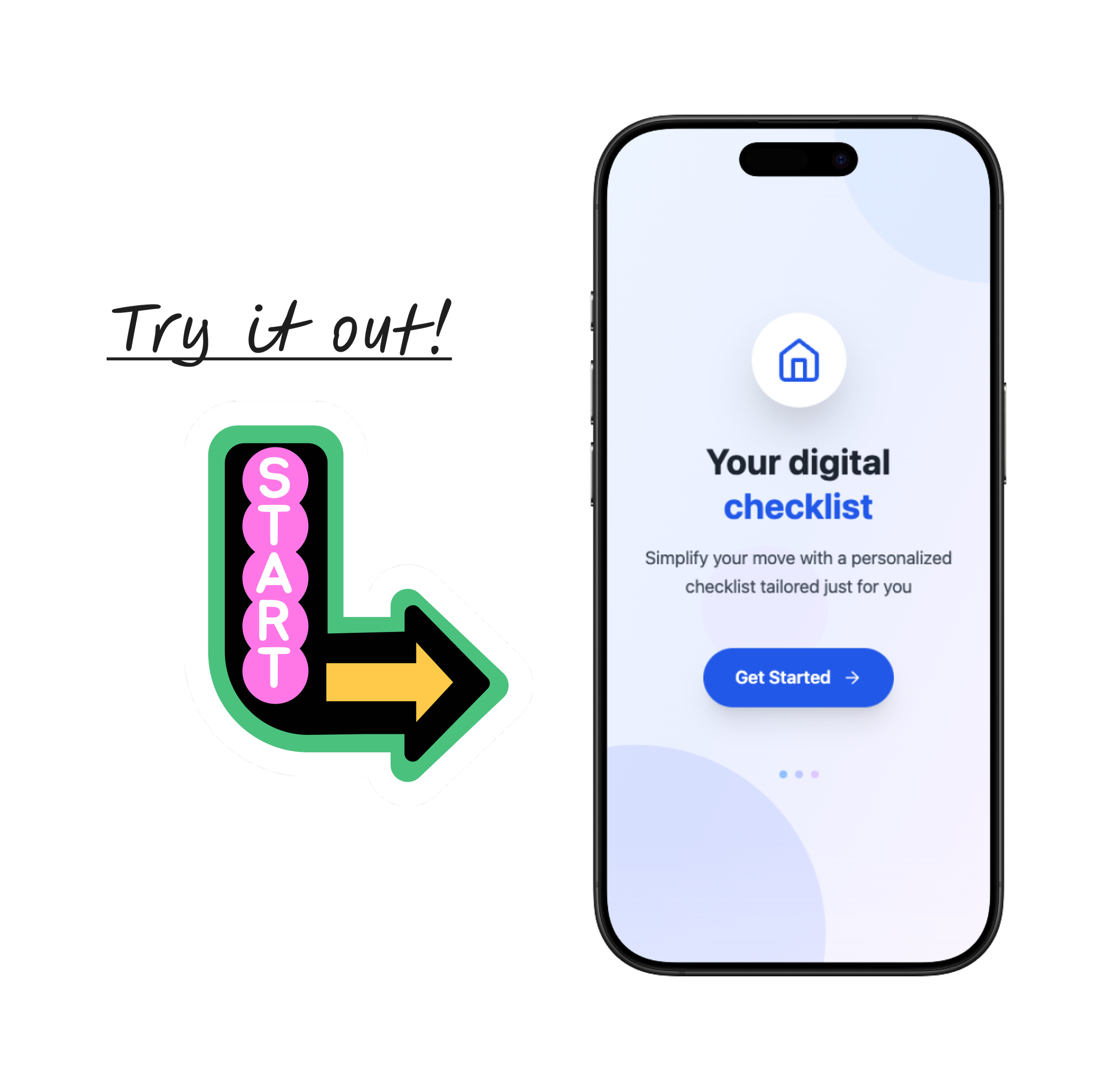
1. The problem
Buying a home is a major life transition. For many people, it involves not just moving to a new location, often from a city to a smaller town or even between the states, but also becoming first-time homeowners. These changes come with a bunch of unfamiliar administrative and practical tasks. Not having one-in-all service, can bring stress and dissatisfaction to what should be a joyful new chapter of life.
Relocation Friction: customers face new administrative systems and bureaucratic differences when moving between states - especially from centralized cities to the decentralized municipalities (Berlin to Brandenburg). Everything from kindergarten applications to tax registration varies and can be confusing.
Home-ownership Friction: many of them are first-time property owners and face unfamiliar legal responsibilities — like paying property tax, setting up garbage collection, or scheduling chimney inspections.
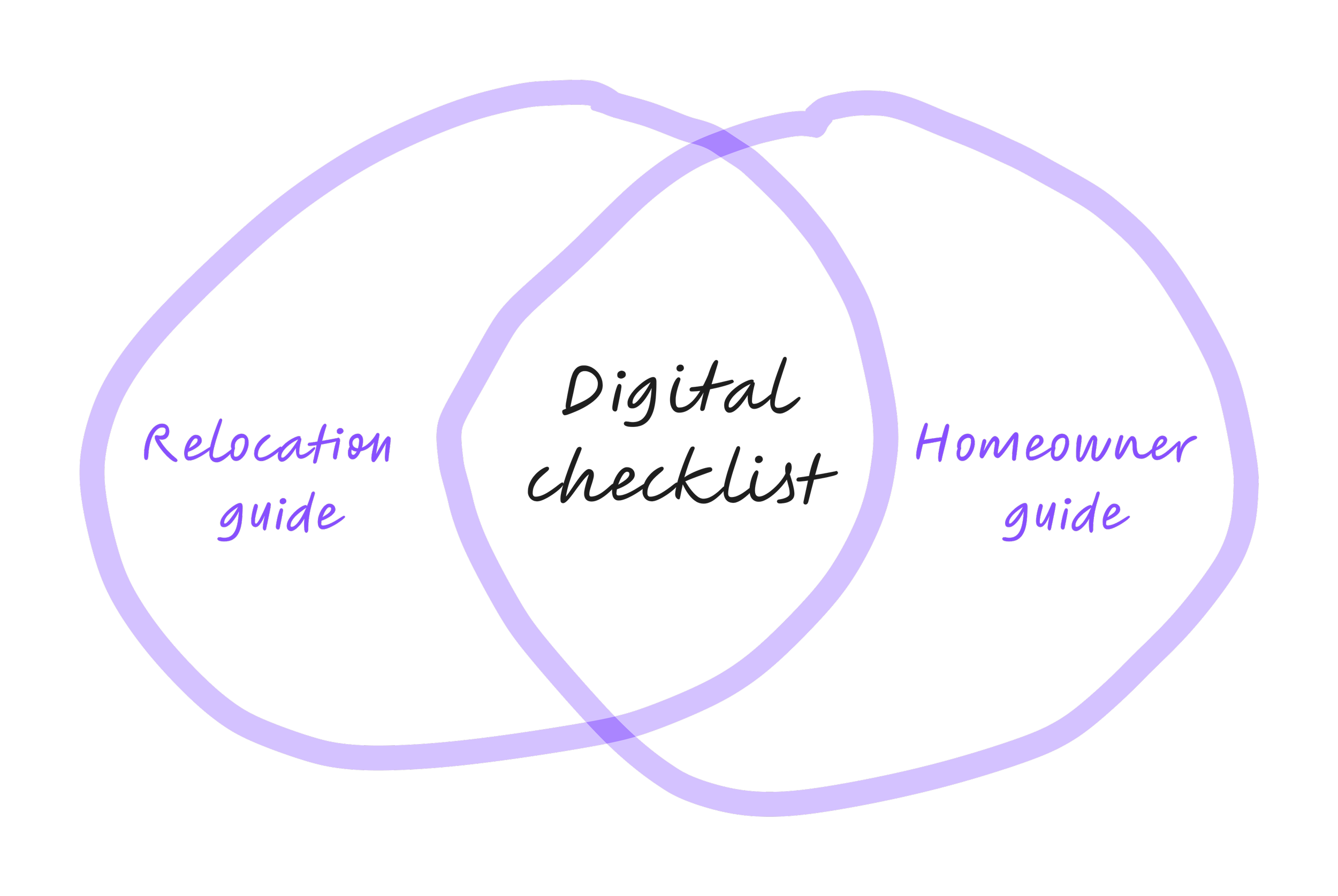
I Initially aimed to design a relocation tool, that from a user’s perspective, would allow to input the relocation data and get a summary of bureaucratic differences between the cities/municipalities, at least between Berlin and Brandenburg.
But I quickly learned how fragmented and decentralised the system is even within one state, so it wouldn’t be feasible to research and then keep all the info up to date, especially with different digitalisation levels across municipalities.
So the idea shifted from a public service concept to a private-sector implementation, which was more realistic.
* This concept works best for big developers like who build grouped settlements - because:
They already have a defined location scope, making it easier to gather relevant municipality-level information.
They often have a centralized sales or customer app and post-sale support structure.
Their customer base shares similar administrative journeys (timing, tasks, needs), so a checklist or onboarding feature has network value.
This would be much harder to justify or maintain for a company that only builds one-off homes in scattered locations.
Though, if a building company only works in a specific state or city, a feature like that would make sense as well and would set them apart from other companies, when customers choose a developer for their private project.
Timeline:
1) I started with the public digital checklist idea (people checking what to do when moving to a new municipality)
2) Saw tech restrictions and moved to a private sector space, that could make this idea scalable
3) After more researching, decided on the checklist hybrid: for relocation AND for new homeowners
4) Identified a few companies as examples: they build settlements rather than single homes
5) Continued data research, did concepts, contacted stakeholders and conducted user interviews
6) Worked on wireframes, user journeys, more interviews, tested the prototype and created final version
2. UX research: statistics
Existing Services
Some German cities and municipalities offer free, generic relocation checklists on their official websites tailored by local administration. Examples include:
Gemeinde Eschenbach, which provides an in-depth before/after move checklist covering topics like garbage, registration, etc.
Bisingen, Ehrenkirchen, and many similar municipalities with nearly identical templates — usually titled “Checkliste zum Umzug”
These lists are comprehensive but static, generic and not personalized for specific property types or family situation (could be not enough or too much info). They also focus only on relocation; do not cover home-ownership tasks like land tax or chimney inspections (there are some pages with useful info for homeowners on the websites, but you need to know to look for it specifically)
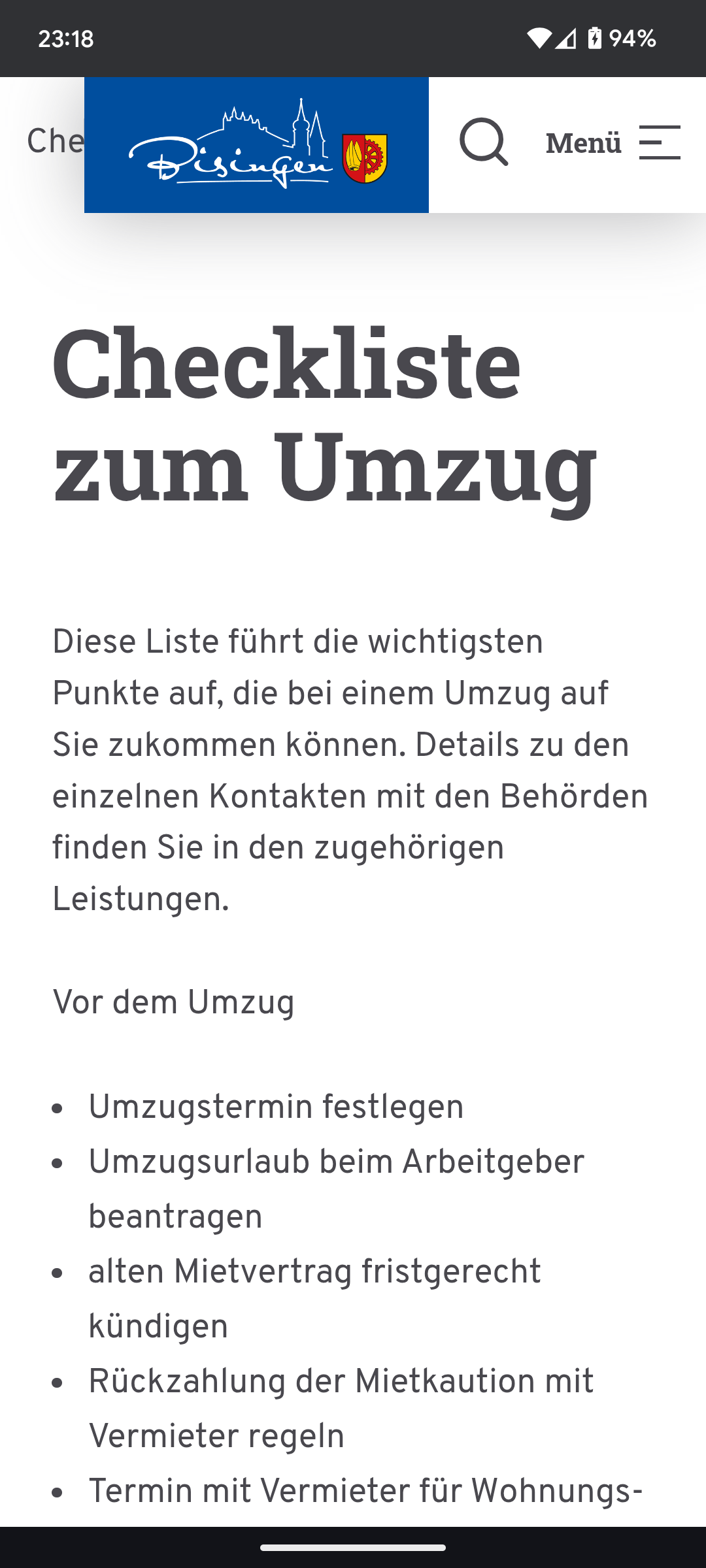
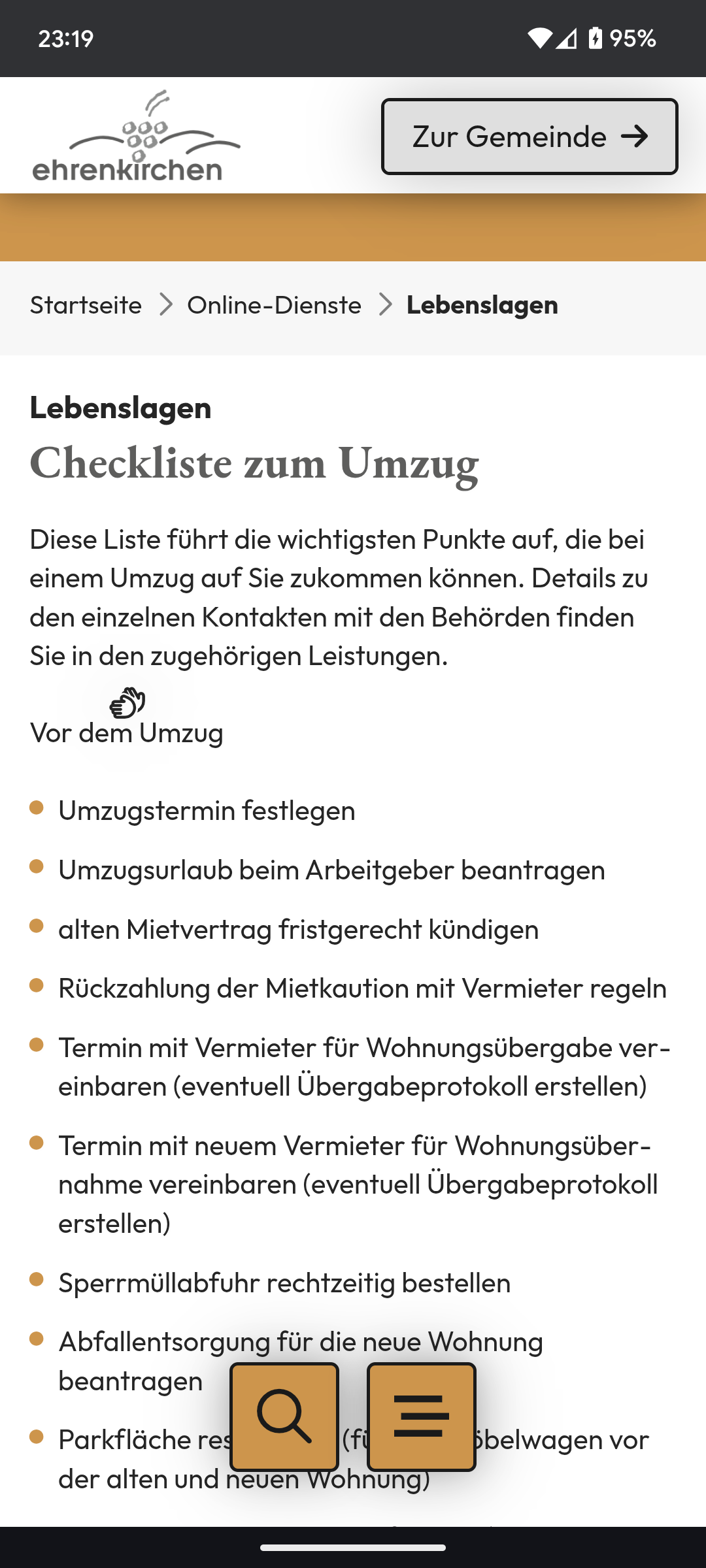
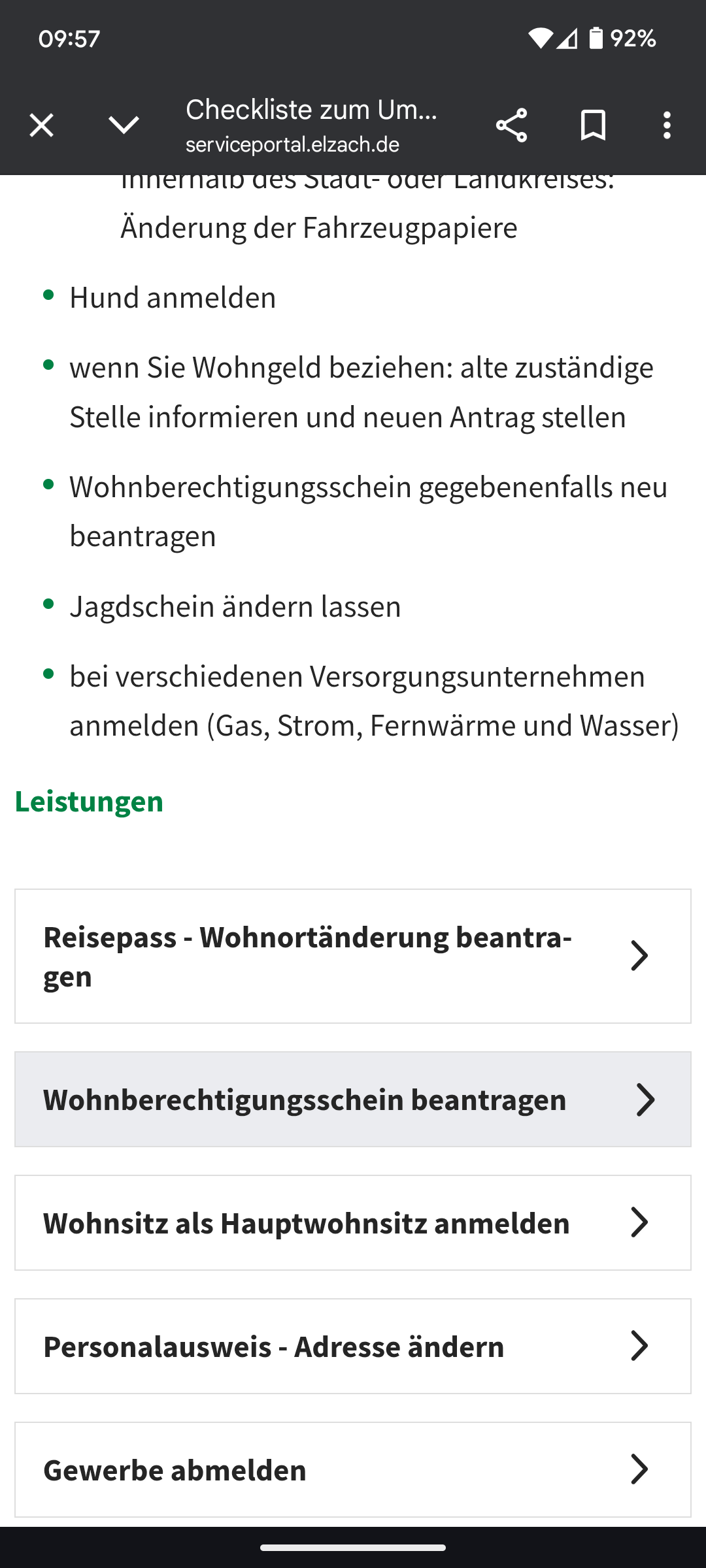
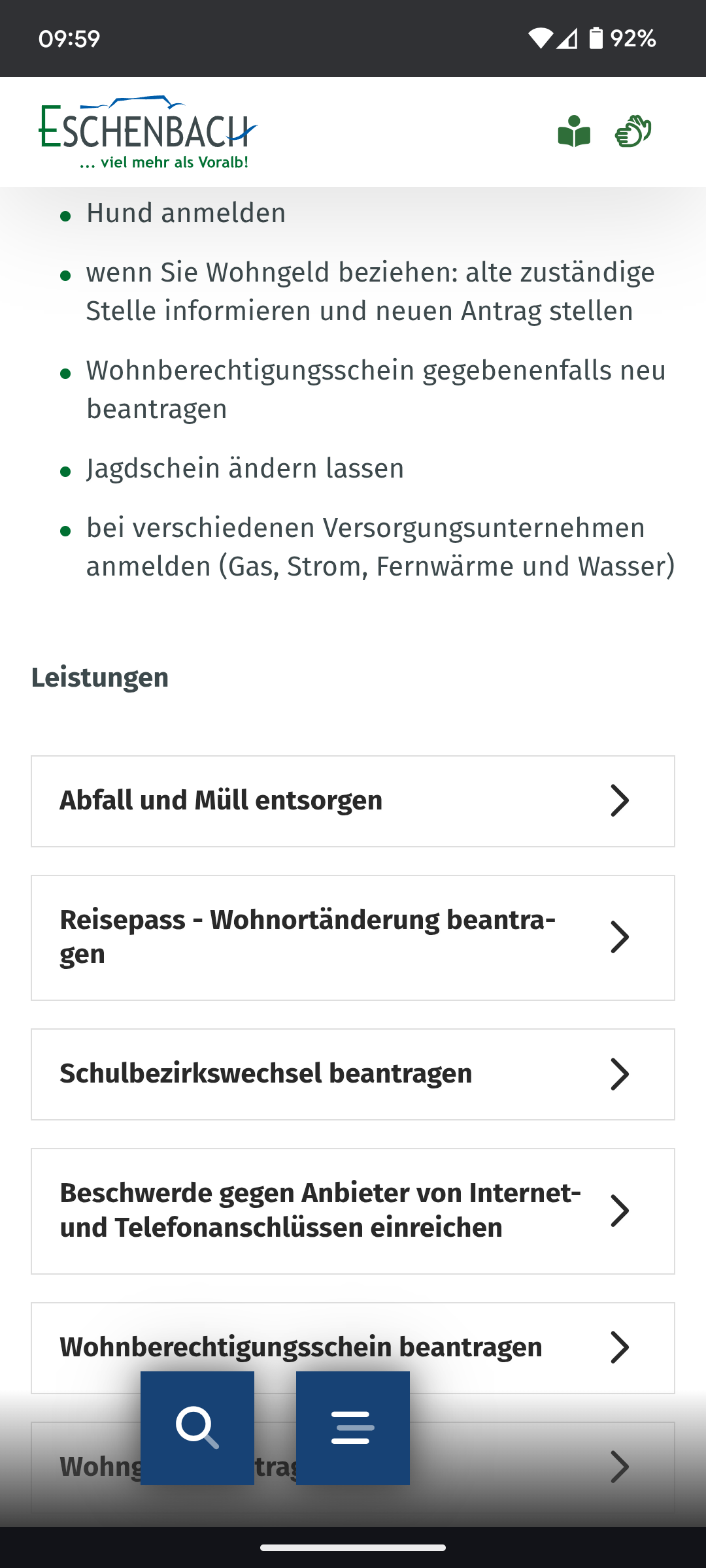
Eschenbach’s checklist was created independently, based on local needs, and implemented by their usual web design agency.
This suggests that such resources are developed on a case-by-case basis, which highlights the potential value of a more unified and structured approach in growing residential areas.
Homeowner checklists exist as well, but are also generalised and static, like Immoscout (or other property relates sites) articles, for example. (Immoscout has several pages with various tips on a subject of moving and/or real estate ownership)
Berlin - Brandenburg demographic data (user base)
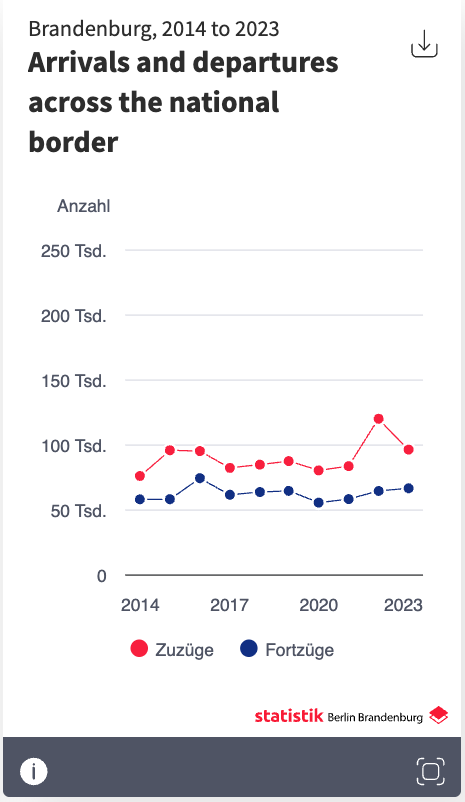
According to Berlin/Brandenburg statistics portal, In 2023, Brandenburg gained approximately 30,000 people. Brandenburg's “Berliner Umland” (Berlin’s immediate outskirts, including the case study target area) experienced disproportionate growth. Between 2011 and 2022, these suburbs saw a +13.6% population increase, compared to only +3.2% for all of Brandenburg. This state is growing, especially because people are moving from bigger cities to smaller towns (In 2022, 33,046 people moved from Berlin to Brandenburg, while only 16,672 went the other direction — resulting in a net migration of +16,374 to Brandenburg from Berlin.)
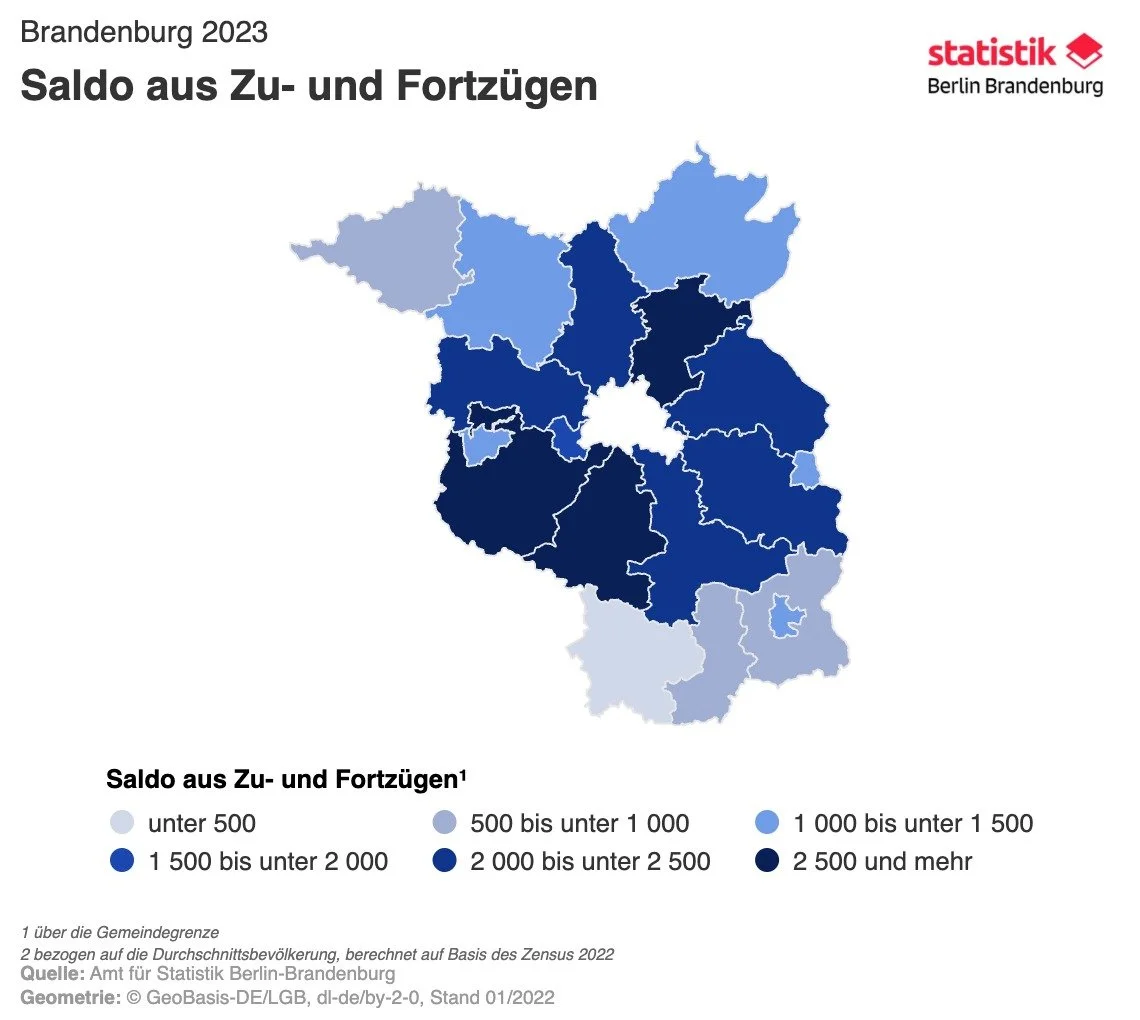
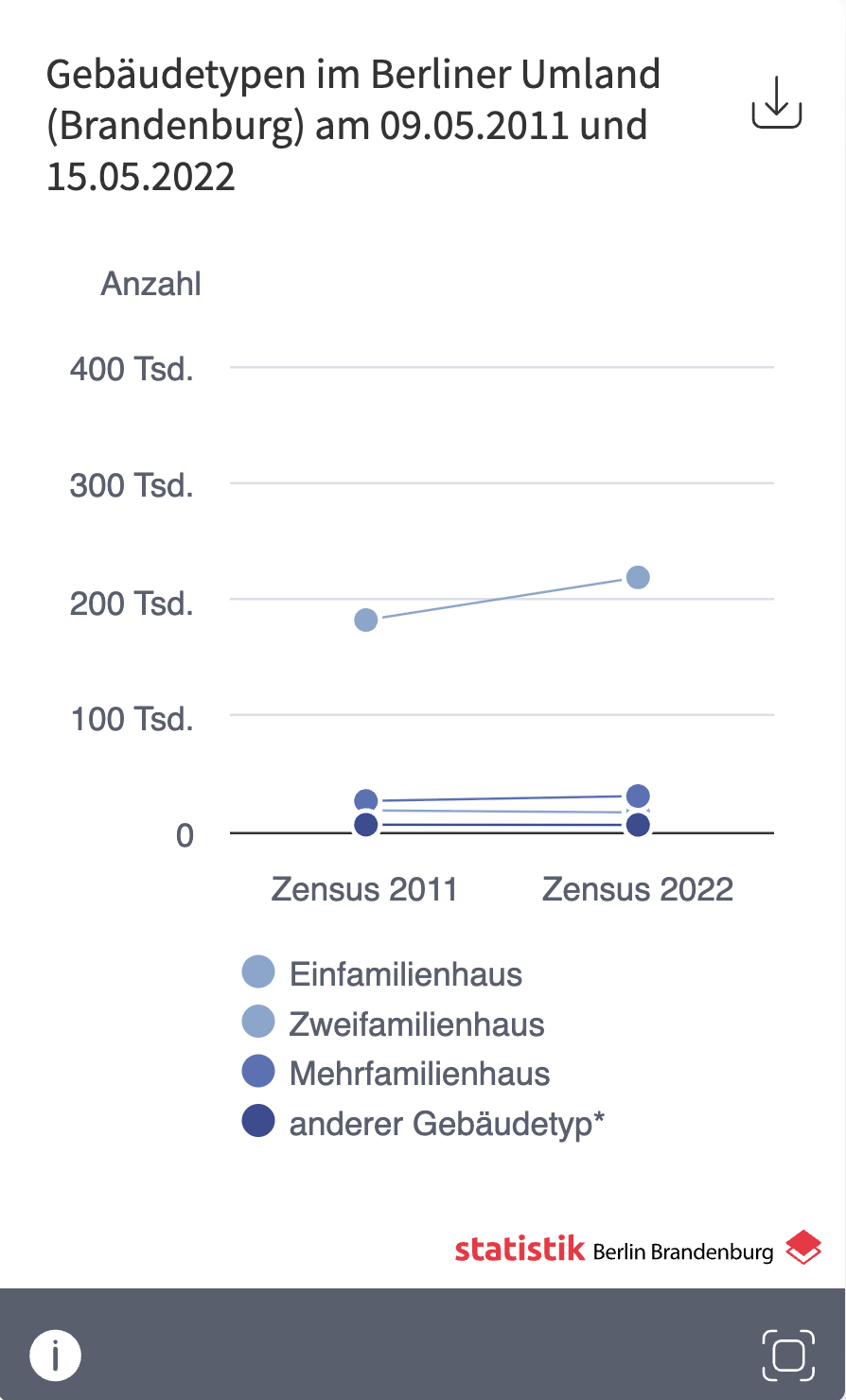
If we look at the 2022 census, the proportion of single-family homes in the Berlin surrounding area continues to grow rapidly - indicating a trend toward low-density residential living. This development suggests an increasing need to support people navigating the administrative and practical aspects of moving into a house, possibly owned and not rented.
After researching existing offers in the relocation checklists area and gathering data, I started to get a better idea of how my feature can look like, and continued with stakeholders interviews, focusing on the customers’ experiences.
3. UX research: interviews
Stakeholder: Customer (moving or recently moved to a newly built house or flat in Brandenburg)
Not having enough access to the people who are currently in the process of moving or buying property, I focused on those, who recently had that experience (withing the last 5 years).
Strategy of recruitment of users:
reached out via social media (facebook groups of the newly built settlements: I asked the admins to share my questionnaire there.
found local people, who were ready (or sometimes even eager) to share - living in Brandenburg myself, I had the opportunity to talk to people at local events, playgrounds etc.
interviewed my friends and acquaintances, that matched the user profile, keeping my social circle bias in mind.
Journey mapping
After interviewing real people and summarising the questionnaire data, I outlined the steps they go through and pain points of their experience.
Learnings:
Several points came up while working on the interviews and journey mapping: I took a step back and looked at the bigger picture, the whole journey of buying a house and moving in eventually.
1. The journey isn’t linear - people are often: Still unpacking while trying to register for taxes. Managing school transitions while dealing with utility delays. Emotionally “settled in” but still getting new paperwork.
The checklist should allow jumping between sections, not follow a rigid timeline.
2. Some tasks are passive but still stress-inducing. At some point after they move in and register, they’ll start receiving letters from the water provider, or land tax invoice from the municipality, or letters from the chimney inspector. These can't be acted on ahead of time, but they can be anticipated.
Add another section to the checklist: things that contribute to the stress level, but that user doesn’t have any control over, yet they have to be prepared for them so that it doesn’t become another anxious moment.
3. Users don’t know what they don’t know. Some participants only learned after they moved in, that they had to register waste disposal separately or that registering Gewerbe is done through the municipality and not Tax office (like in Berlin). The uncertainty ("Am I forgetting something important?") causes anxiety.
The checklist becomes not just a task tracker, but a mental safety net, helping users feel confident they’re not missing anything essential. They need a visual and emotional confirmation of tasks completion.
4. Mobile-friendliness is essential. Multiple pain points highlight that many local websites are not responsive or intuitive on mobile, which is sometimes the only device available during a move. Some mentioned that they had to look up the information at work, using a desktop computer, because it was the only way to get a proper overview.
The checklist must be optimized for mobile use and minimal navigation effort.
Stakeholder: building developer companies, others
It was important, of course, to get relevant data on the customer portrait of those building companies, so i contacted several developers from Brandenburg that match the profile: they build settlements or apartment complexes rather than single house projects, they offer some sort of customer support (in case with Bonava, for example, there’s even a customer-facing app, allowing to keep track of the building process).
After talking to the sales, I found out that 3 companies, including Bonava (my main reference point), offer case by case help: I was told I can reach out to the contact person who was responsible for my contract, and maybe they could help on an individual basis if I have any specific bureaucratic questions. So there is some level of post-purchase consultations or help.
After conducting research and interviews, I developed a three-phase concept for a digital checklist as a marketing feature for a building developer - a solution that supports customers during a stressful transition while also strengthening brand perception and long-term loyalty.
4. Design and prototype
MVP and other options - sketch space
This feature can be rolled out and tested in hree scalable phases:
Phase 1: PDF tailored by location and housing type (house/flat), sent per email after the purchase
Phase 2: Interactive checklist in mobile or webapp (tick-off tasks), depending on whether the company already offers a user account or an app
Phase 3: Smart feature with reminders, community tips (advanced), and feedback tools (marking an item as not clear enough or outdated), if the company already has a customer facing app, integration would be feasible with minimal dev investment during the pilot phase.
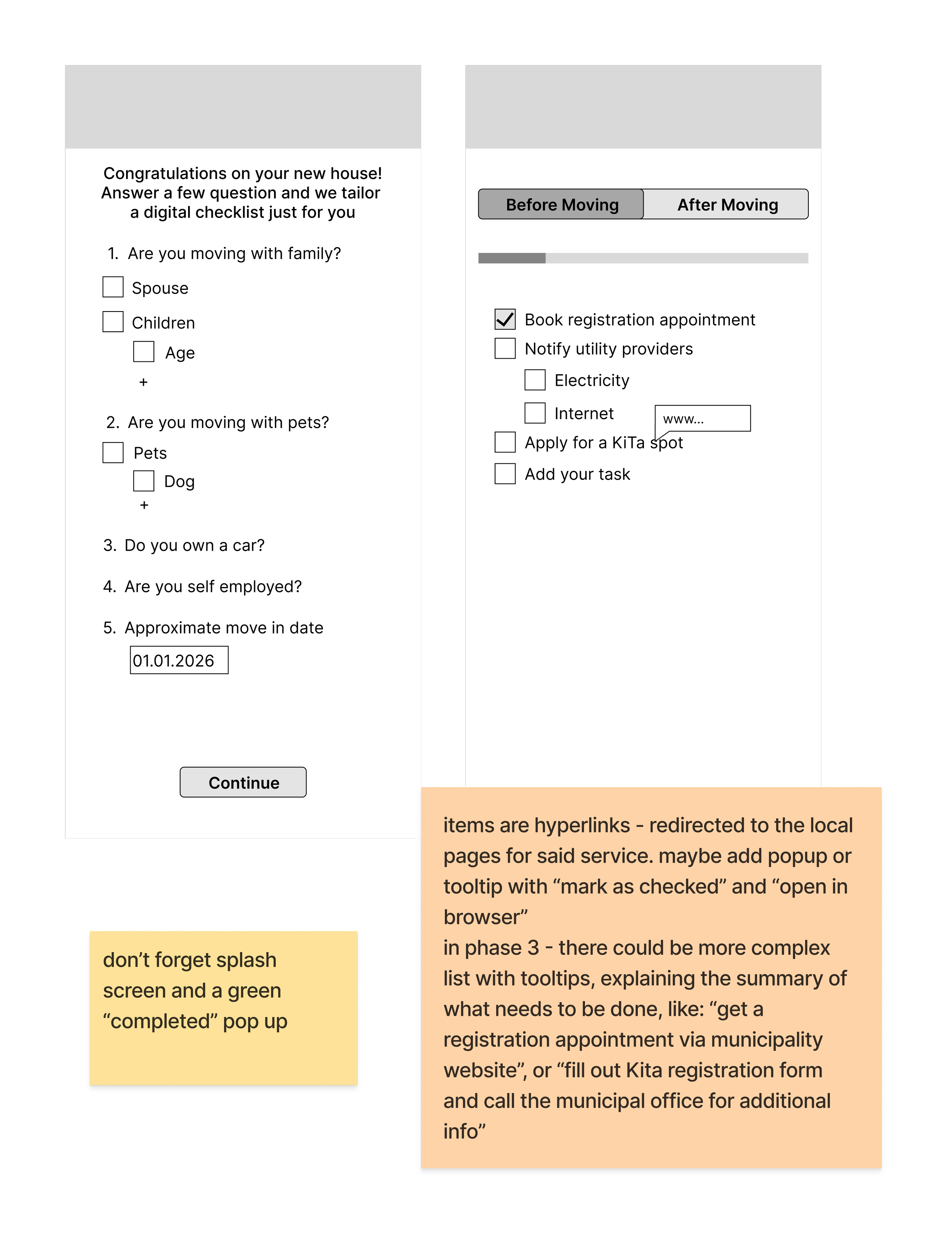
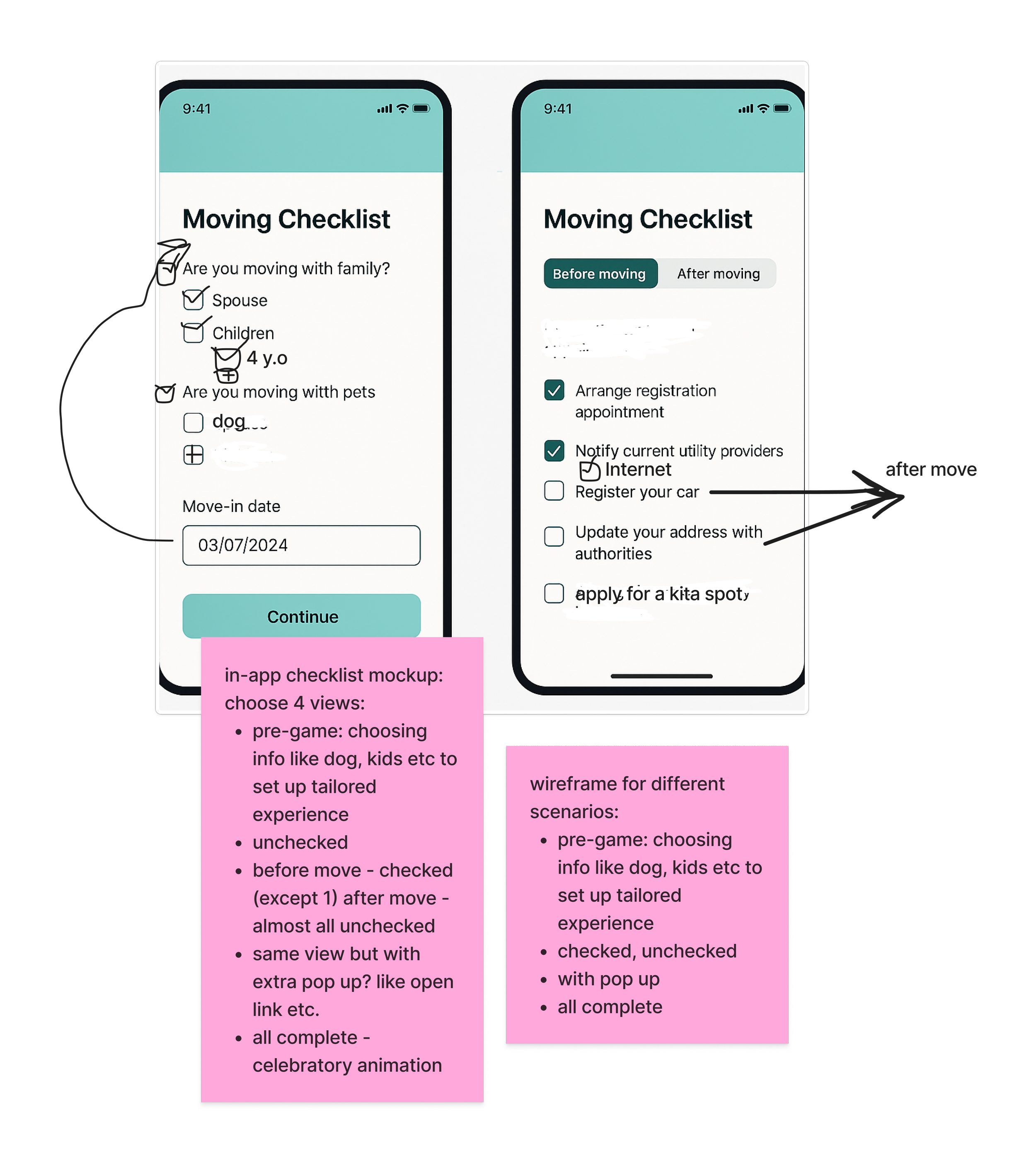
Final concept based on phase 2 - Interactive in-app checklist - visual mockups and prototype
I went through a couple of iterations and tested them in Maze, and after getting some feedback points, I built the prototype with Bolt vibecoding tool, based on my mockups.
1 - Onboarding:
the app/website already has client’s
house type and location. Here we ask questions that would be relevant for giving the tasks to the client. Based on that information, the app compiles a list of tasks, tailored for this situation specifically.
2: Checklist
- split into before/after, the checklist offers
- editing of (some) tasks,
- adding custom tasks,
- opening external links that are redirecting to a local service (if available in current location, like online school application).
- additional screen - offers an overview of letters or invoices that customer will receive after they’re registered at the new address. Those letters are sent by local administration, or tax office and can’t be “initiated” by the user, so the customers just need to have an overview of that to avoid unpleasant surprises.
5. Metrics and Value / Conclusion
Value for the Company
This feature is not about direct monetization but about enhancing the post-purchase experience. For a building developer, the checklist can:
Strengthen the relationship with customers after the sale
Reinforce the company’s role as a community-minded partner
Offer a form of soft brand differentiation in a competitive market
Serve as a low-effort marketing activation, especially during pilot/testing phases
Value for the Customer
For customers, especially first-time homeowners or those moving between the states - this feature directly addresses uncertainty and information overload. It offers:
Less stress related to bureaucracy
Tailored, location-specific guidance
Visual progress tracking through a checklist format
A consolidated, time-saving resource
Measuring Success
The success of the checklist feature wouldn’t be measured in sales but in positive customer engagement, satisfaction, and retention.
Behavioral Metrics
Click-through rate (if the checklist is featured in app or on the website)
Going beyond onboarding page
Checklist completion rate
Business & Marketing Metrics
Positive post-purchase feedback
Net Promoter Score*
Customer satisfaction surveys*
Increased brand loyalty and social sharing
Positive press or word-of-mouth
*With careful question design that addresses real pain points, not generic satisfaction prompts like “Would you recommend this?”
This case study explores how a simple digital checklist can address the often-overlooked bureaucratic challenges new homeowners face when moving into a new municipality. Through a structured research and double diamond design process, including qualitative interviews, quantitative data gathering, and user journey mapping - I identified key pain points and opportunities for support.
The result is a user-centered solution that supports both residents and brands, helping people feel less overwhelmed during one of life’s most complex transitions.
The concept was further developed into a prototype using AI-based coding tool to simulate what such a feature could look like in real-world implementation.