Gamifying museum visit - learning history through storytelling
2018 - research, concepts, interviews, UX, UI, illustration, testing
I developed a gamified storytelling experience in collaboration with the German Historical Museum in Berlin. The project was designed to support students in integration courses, who regularly visit the museum as part of their curriculum. The goal: to make the museum visit more engaging, memorable, and educational for learners from diverse cultural and linguistic backgrounds.
The concept followed the journey of multiple fictional characters, guiding students through historical narratives tied to real artefacts in the museum. Learners used a mobile app to search for exhibits, solve puzzles, and answer quiz questions - all designed to deepen their understanding of German history through interactive learning.
I collaborated closely with the museum’s education team to ensure the content respected strive for diversity, historical integrity and the pedagogical mission of the institution. The design also aligned with the museum’s existing visual language, using color-coded time periods and motifs from their branding to support wayfinding.
1. Problem
Learners in integration courses are navigating a complex and often overwhelming transition: adapting to a new country, mastering a new language, managing bureaucracy, and a lot more, depending on their age, family situation and background. In the midst of this already stressful period, they are expected to absorb large volumes of abstract historical knowledge (often delivered through traditional museum tours) and are tested on their understanding.
This creates a mismatch between emotional capacity, cognitive load, and teaching format. The learning environment is information-heavy, often relying on passive reception in a setting designed for academic focus. Considering today’s challenge of information overload and shrinking attention spans, it becomes clear that a more engaging learning approach is needed.
2. Problem Discovery
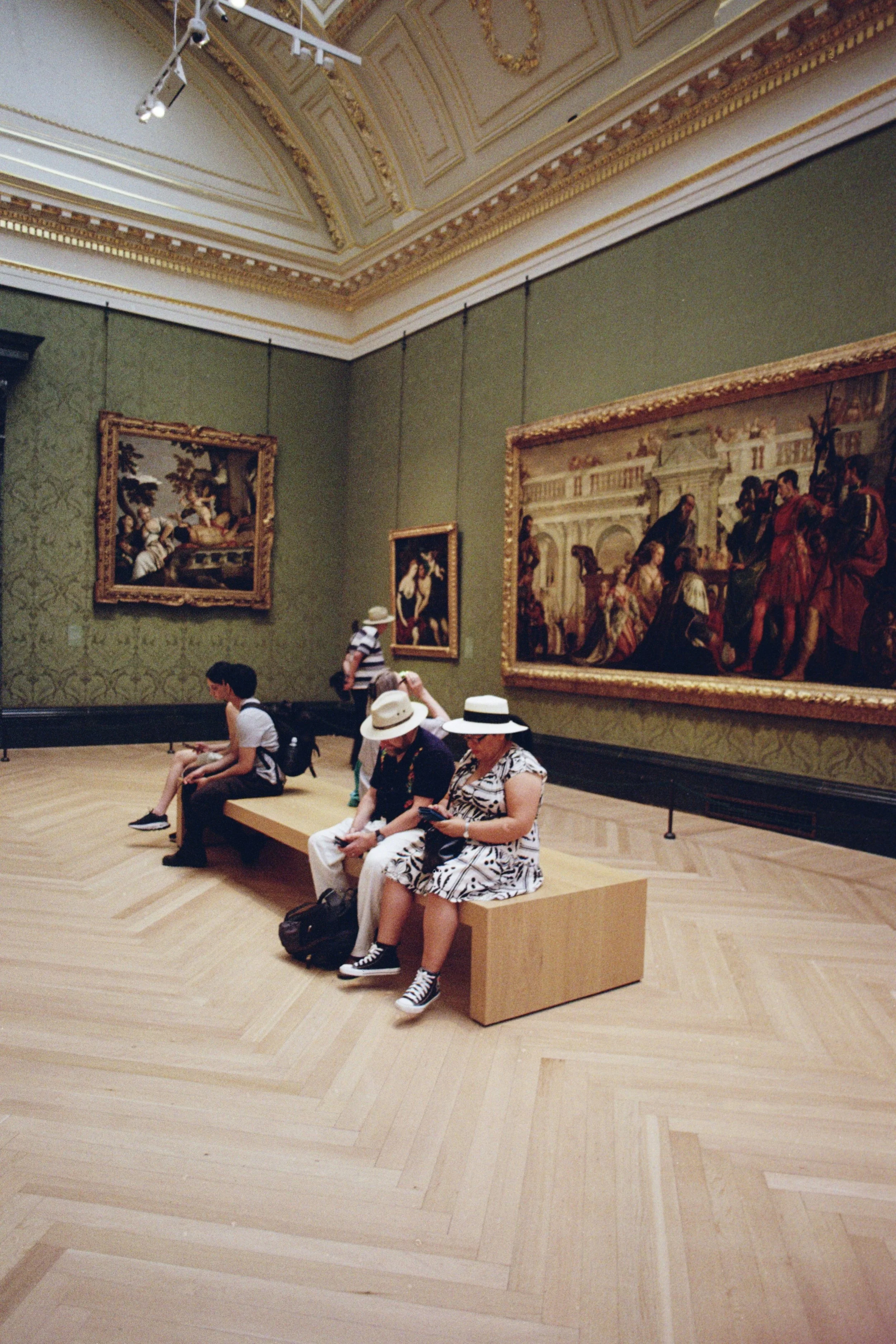
“Traditional” museum experiences = conventional presentation of information. Text-heavy exhibitions and linear timelines don’t always invite active engagement, and it leads to people forgetting everything they saw and heard, right after they exit the museum.
On a personal level, I supported my partner through his integration course when he arrived in Germany. Having also gone through the process of settling in a new country myself, including preparing for the citizenship test, which requires cultural and historical knowledge, I was familiar with the challenges this audience faces.
As someone, who worked in games and studied interactive media, I saw clear parallels between these educational obstacles and problems gamification is well-suited to solve. Could we use narrative and interactivity to help people not just remember historical facts, but connect to them emotionally?
3. Research
In the early phase of the project, I studied gamification principles and examined how they had been applied in museums and education. My aim was to understand both the pedagogical potential of gamification and its relevance in museum learning environments, especially for adult learners in integration contexts.
3.1 Gamification Techniques. Each of these elements was assessed for its potential to align with the needs of integration course students: engagement, memorability, cultural framing, and accessibility for language learners.
Narrative immersion
Exploration mechanics
Quizzes and feedback loops
Role-play and perspective-taking
Goal-oriented progression
3.2 Existing Gamified Museum Experiences. I looked at existing museum-based gamification projects in Germany and beyond, including:
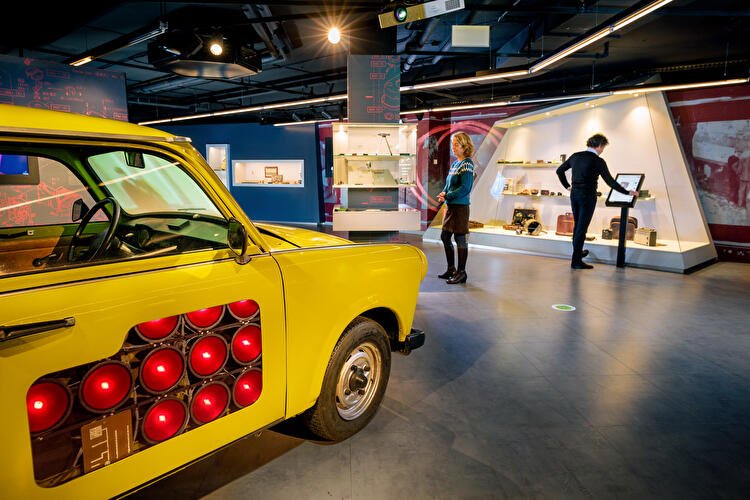
Mobile scavenger hunts, like Bristol’s Hidden Museum app
Escape-room-inspired museum games, which tend to be more immersive but require high facilitation and cost
AR/VR experimental formats, which often prioritize novelty over accessibility
Digital projects, accessible from outside the museum - websites with games or quizes, related to the museum
3.3 Learning Frameworks & Integration Course Context. In parallel, I reviewed research on adult education, particularly for language learners and recent immigrants. Integration courses are structured but intense, combining language instruction with sociopolitical education. Learners are expected to grasp complex systems like German governance, history, and rights, and then required to pass the “life in Germany” test. The age of the integration course students can vary from very young to quite mature, meaning there’s gonna be difference in cognitive resources, tech-savvyness and accessibility requirements. This context called for learning tools that:
Present material visually and interactively, not just textually
Support narrative-based comprehension over memorization
Are intuitive even with minimal digital literacy
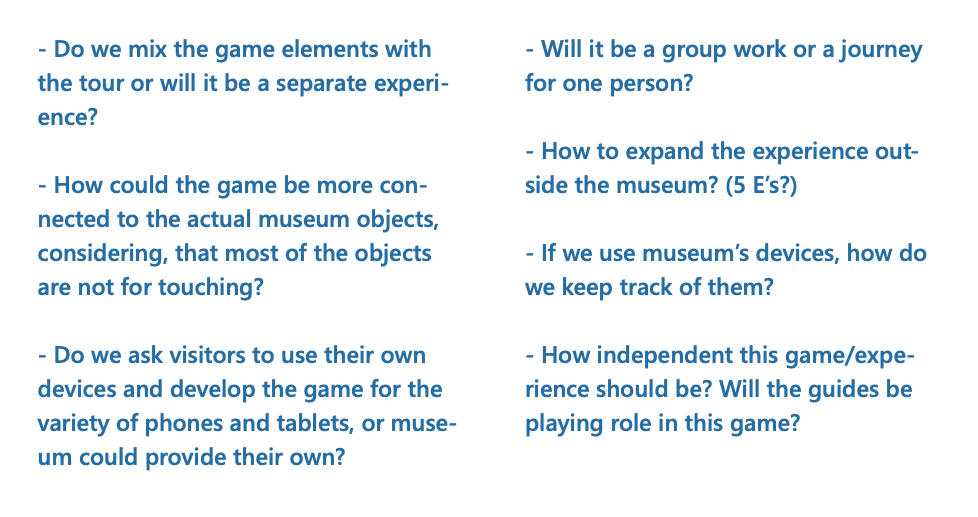
This insight reinforced the need for a hybrid approach - one that mixes story, real-world artefacts, and mobile interaction, but remains lightweight and respectful of the museum space. There was also a lot of questions I needed to answer, when I was thinking about the practical value and restrictions of the project.
Main point was to separate JUST gamification mechanics and techniques from actual Meaningful Gamification. To not go in the direction of gamification for the sake of gamification, but to implement it where and if it’s needed.
Resources like Because Play Matters and
US Deaprtment of Education hand studies like Meaningful Gamification and Student’s motivation by Lynette Tan helped me to get deep and understand the concept in detail.
© Deutsches Spionagemuseum Berlin
4. Collaboration and Stakeholders
To ground the project in a real-world setting, I reached out to museums in Berlin. The German Historical Museum (DHM) was open to collaborating and gave me permission to observe integration course tours, study visitor behaviour, and test my concept within their space. Working with a big institution like this was a great experience in terms of managing different stakeholders’ expectations and requirements. When I presented the first draft of the character story (developed together with my museum contact person) to the next level of stakeholders, they raised some concerns: the fictional nature of the character was problematic, as it conflicted with the museum’s fact-based educational mission. These discussions led to a significant turning point in the project, as we decided to work on the 2 characters, testing which approach would be more successful.
Additionally, I partnered with BERLITZ language school - an educational institution that offers integration courses. They gave me access to a group of students preparing for their final exams and allowed me to join them during their museum tour. This enabled direct user research and observation of how learners interacted with the museum setting. Through interviews and informal discussions with both teachers and students, I gathered qualitative insights into their challenges and expectations.
5. Designing, Writing, and Prototyping
5.1 Story Development
To keep the experience emotionally engaging, I chose to build the game around a character-driven narrative. In the first working meeting with the museum team, the ideas and the concept were discussed. The plan was to have the character and see the history through their own story. We focused on one chapter of German history as a start.
First ideas/options:
fictional character/mascot (cartoon-y medieval knight)
something like a metaphoric symbol of Germany or German history
a symbol or a representation of the museum (a guide character)
a character who lived in Germany during the given time period
I researched first-hand stories of people living in post-war Germany and discussed different directions with the museum team. We wanted the character to be authentic and rooted in history, while also ensuring relevance and inclusivity. After further discussions and raised concerns, we agreed to compromise and test two versions of the experience: one featuring the original fictional character (adjusted to address the feedback), and another using a neutral “digital guide” who would deliver similar information without a personal narrative. This allowed us to preserve the project’s focus on meaningful, story-based gamification while respecting the museum’s institutional values. The comparative testing would tell us, whether narrative immersion improved learning, or whether a more traditional, guide-based format remained more effective for the audience.
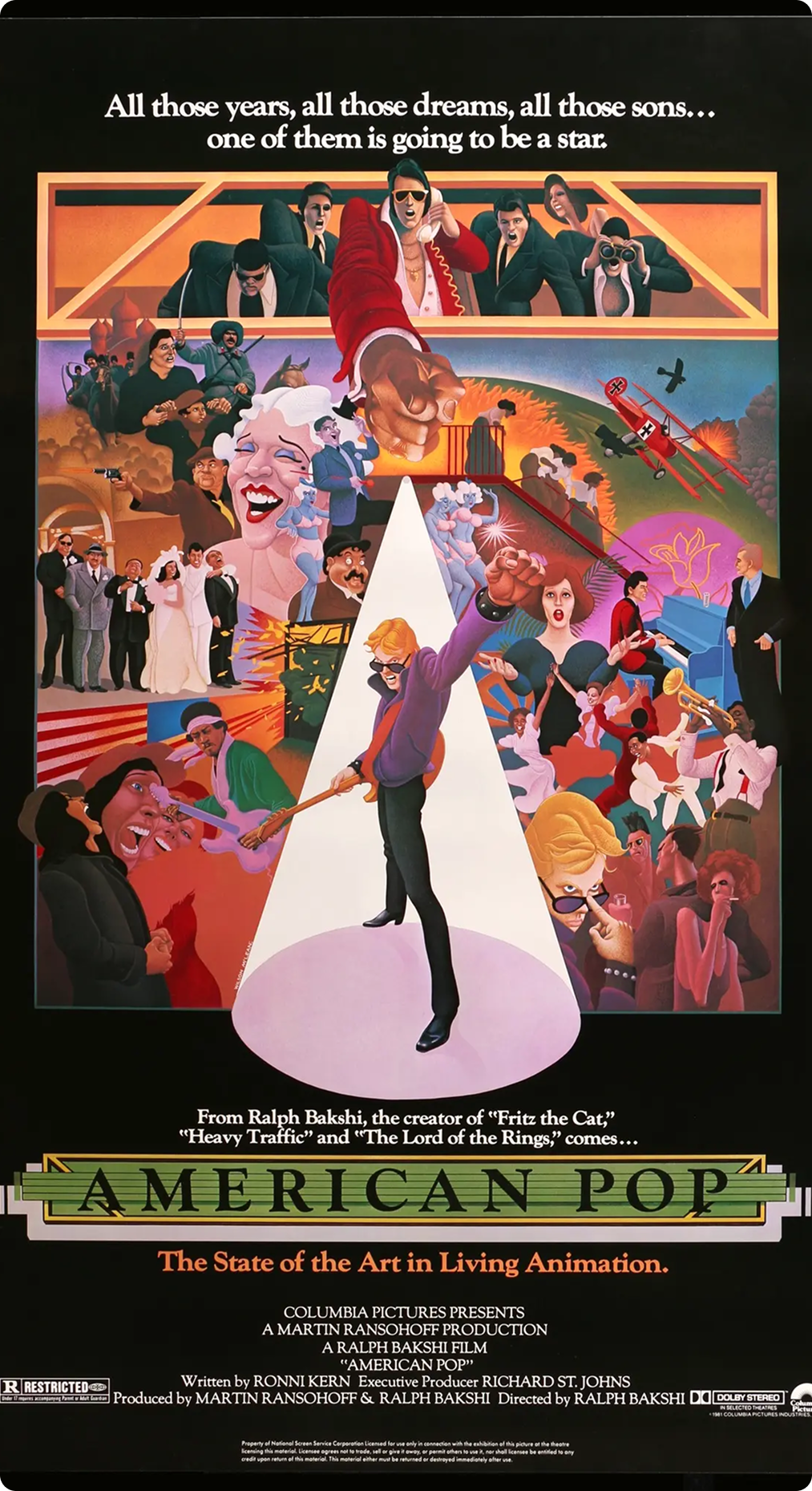
As a source of inspiration I looked at the animated movie “American Pop” by Ralph Bakshi (1981). It shows the history of music through the history of several generations of a family, coming to America, fleeing from Russian revolution.
First draft of the character’s storyline, based on multiple people stories. He was born in West Germany, moved to Berlin as a child, and later became an activist after being separated from his father due to the Berlin Wall. His story centered on themes of division, activism, and eventual reunification.
After addressing the museum’s concerns, I developed two narrative approaches. The first was a fictionalized version of a real historical figure - Paul, based closely on the life of Werner Krokowski, a refugee who fled East Prussia (now part of Poland) after World War II. His story retained factual accuracy while being adapted slightly for narrative purposes. This character’s background was more relatable to the integration course students, many of whom have personal or family experiences of forced migration.
The second character was a neutral digital guide, designed to align more closely with the museum’s traditional format. To keep this option engaging, I proposed multiple avatar choices at the start of the game, each with a distinct voice and personality. While the content remained the same, the delivery varied based on the guide chosen. For the prototype, one version of this guide was fully developed.
The Text: Particularly important were the notes from museum employees, who worked with me on this project, regarding the language, wording, and historical accuracy. Thanks to these reviews I could use proper terms like “Bezirke” instead of “Bundesländer” when talking about East Germany, using the full name “Bundesrepublik Deutschland” instead of just “BRD”, or not putting the famous “Wir sind ein Volk” protest sign as the illustration to Monday Demonstrations in 1989, because as it turned out, this sign was used in another demonstrations, even though it is the symbol of the 1989 protests in general. Such small but important detail are crucial in the projects, connected to history and I’m glad I had the assistance from the museum’s side in this.

5.2 App Design and Prototype
I started with the flow of the game, which was mostly to help myself to see the structure more clearly. I did a few iterations and sketches, then moved to the first design prototype using Adobe XD and later collaborated with a developer to build a playable demo. The interface used the museum's color-coded historical period scheme for navigation, and the visual design was informed by the museum's brand elements. After early usability testing, I shifted from a dark UI to a light-background interface, which performed better in the museum’s lighting conditions and on devices with low screen brightness.
5.3 Analog Integration
To ensure the game would not distract from the physical museum visit, I designed real-world interaction points: QR codes and small physical clues placed next to specific artefacts. This encouraged players to explore beyond their screens and stay grounded in the actual exhibition space.
This project felt like a perfect case for following “The 5 E’s of Experience” design model:
Entice - The experience starts before the museum visit with a teaser quiz or interactive preview shared by the school or the museum, sparking curiosity and preparing students for what’s to come.
Enter - On arrival, students begin the experience with the museum tour and app launch. The app and the printed analog materials (like the postcard task) mark the beginning of the interactive journey.
Engage - Inside the museum, players use the app to solve puzzles, find clues, and answer questions, combining game mechanics with cultural learning. AR elements, scavenger-hunt logic, and story immersion help sustain interest and attention.
Exit - At the end of the game, players are rewarded with positive feedback and, optionally, a small token (e.g. sticker or postcard) if they complete the experience - reinforcing closure and accomplishment.
Extend - After the visit, the app continues to serve as a learning tool, offering access to timelines or summaries of historical events. Class discussions the next day also help reinforce retention and allow students to mentally replay the experience, creating a lasting educational impact.
In the end, this was a story-based, educational scavenger hunt. Using a mobile app, players follow a guided narrative (either a fictional character or a digital guide) as they move through selected exhibits. Along the way, they solve puzzles, answer quiz questions, and uncover clues tied to real artefacts (which helpes them to learn this material). An analog element, such as a postcard-based task, ensures the experience remains grounded in the physical space and encourages players to explore beyond the screen. The content connects directly to topics covered in das Leben in Deutschland integration test, reinforcing key historical knowledge in a low-pressure, interactive way.

6. Wrapping Up and Testing
After the initial development, I joined a group of integration course students on their museum visit. Following the regular guided tour, they were invited to test the interactive chapter.
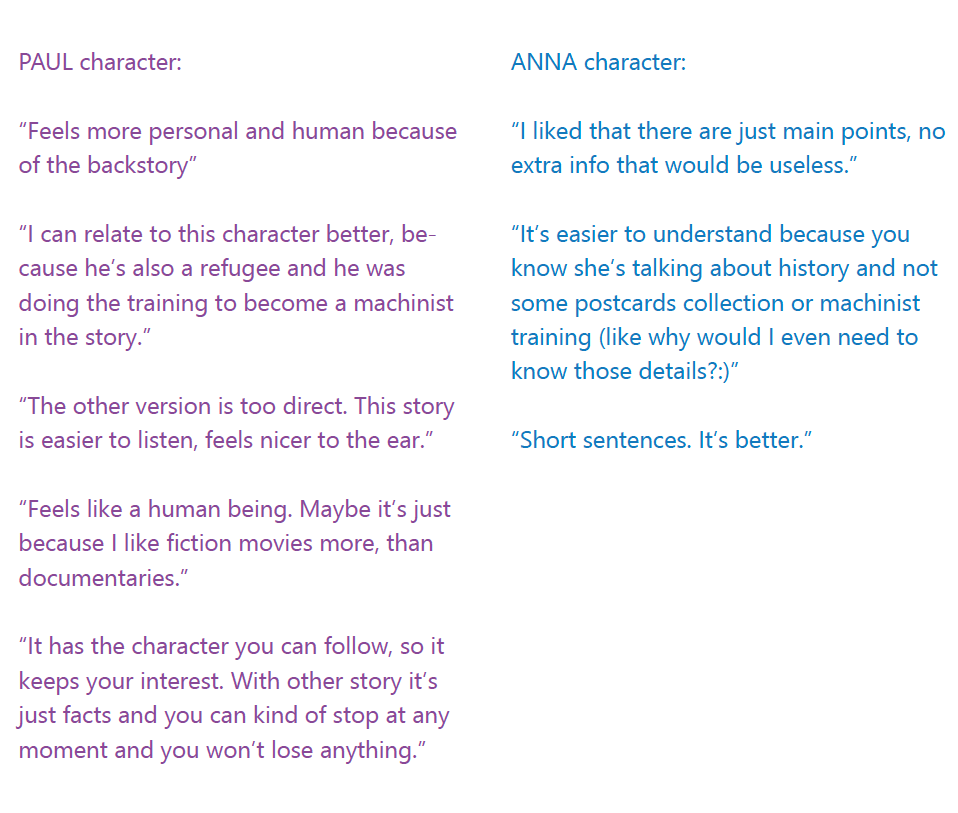
I observed how they interacted with the interface, moved through the space, and responded to the story. Feedback showed that:
Students felt more emotionally connected to the material when engaging with the character's story. 80% preferred the fictional character to the neutral guide character.
They appreciated having quiz-like elements that echoed the integration test, but in a low-pressure format. There was feedback about difficulty to find analogue elements though.
Many said they would be more interested in visiting other museums if similar formats existed.
They unanimously mentioned that the prototype would feel way better with animations and additional features, but in general it was straightforward enough.
This informal testing validated both the engagement value and educational potential of the concept.
7. Conclusion
This project demonstrates how interactive storytelling, gamification, and inclusive design can be combined to support learners in complex educational contexts. What started as a thesis project evolved into a real-world prototype that helped bridge the gap between institutional history and lived experience.
I was able to create a solution that respects both the museum's mission and the learner’s journey, and opens the door for future applications in cultural education and civic integration.